
The Jobseeker’s Guide to Personal Branding on LinkedIn

Personal branding can be a career supercharger. PayPal’s recent decision to invest up to $236,500 in a Head of CEO Content proves it’s no longer optional. It’s a serious business priority.
But here’s the challenge, building a personal brand is a commitment.
Before diving in, it’s worth asking yourself:
- Why do I need it?
- Do I have a clear message?
- Am I ready to show up consistently?
- Do I have the time to engage meaningfully?
If your answer is yes, the next step is figuring out how to start without it taking over your life. That’s where AI can help. With the right ChatGPT prompt, you can quickly turn your skills, experience, and career wins into a consistent LinkedIn presence that attracts opportunities, even if you’re not a CEO with a six-figure brand manager.

Here’s a ChatGPT prompt you could try as a jobseeker looking to build you personal brand.
ROLE PRIMING
You are “CareerBranding-GPT,” a strategist helping jobseekers and career-focused professionals turn their experience, skills, and achievements into high-trust LinkedIn content that attracts recruiters, hiring managers, and industry peers. You don’t write generic “career tips”, you narrate proof-based, credibility-building stories from real work experiences.
TASK
Build a 30-day LinkedIn content plan that positions the jobseeker as a knowledgeable, trustworthy, and visible professional in their field. Show:
• How to identify credibility assets (projects, results, skills, awards, recommendations, lessons learned)
• Post format (hook, story/context, insight/value, CTA)
• Engagement plan (comment strategy, networking follow-ups, profile optimization)
DELIVERABLE / OUTPUT FORMAT
• 4 weekly post outlines (hooks, story, lesson, career-relevant CTA)
• One visual suggestion per post (before/after metrics, work samples, certificates, workflow diagrams)
• 30-day posting & engagement rhythm (days/times, comment strategy, message follow-up)
NEGATIVE PROMPTING
• No vague advice (“work hard,” “never give up”)
• No random reposting of inspirational quotes without context
• No spammy “I’m open to work” posts without showcasing skills or proof of value
Here’s an example of what a week of LinkedIn post ideas could look like for a jobseeker aiming to position themselves as a high-value hire:
Day 1 | Story Post
- Hook: “I thought I nailed the interview… until I didn’t.”
- Story/Context: Share a real (or anonymised) experience where you learned a tough but valuable career lesson.
- Lesson/Value: Resilience and adaptability are just as important as skills.
- CTA: “What’s one lesson you learned the hard way in your career?”
- Visual Suggestion: A simple photo of a coffee cup and notebook, captioned with the key lesson.
Day 2 | Expertise Post
- Hook: “Three things I do in the first 30 days of any new role…”
- Story/Context: Outline your onboarding strategy.
- Lesson/Value: Show you’re proactive and results-oriented.
- CTA: “What’s your number one tip for starting a new job?”
- Visual Suggestion: A checklist graphic.
Day 3 – Insight/Trend Post
- Hook: “AI isn’t taking your job… but someone using AI might.”
- Story/Context: Share a recent industry shift or tool that’s changing how your field works.
- Lesson/Value: Show you stay ahead of trends.
- CTA: “Have you started using [tool/trend]? What’s your experience?”
- Visual Suggestion: Screenshot of the tool in action (if allowed).
Day 4 – Proof of Value Post
- Hook: “We cut processing time by 40%, here’s how.”
- Story/Context: Share a short case study of a result you achieved.
- Lesson/Value: Demonstrates measurable impact.
- CTA: “What’s one win you’re proud of from the last year?”
- Visual Suggestion: Before/after metrics graphic.
Day 5 – Networking Post
- Hook: “I owe my last two jobs to my network.”
- Story/Context: Explain how you leveraged relationships to find opportunities.
- Lesson/Value: Encourage building authentic connections.
- CTA: “Tag someone you’ve worked with who’s helped your career.”
- Visual Suggestion: Photo from a conference, meetup, or coffee catch-up.
Day 6 – Career Tip Post
- Hook: “Your LinkedIn profile is your 24/7 recruiter.”
- Story/Context: Share one tip for optimising LinkedIn for job search.
- Lesson/Value: Show you understand the hiring process.
- CTA: “What’s one thing you’d add to a LinkedIn profile that stands out?”
- Visual Suggestion: Screenshot of your own profile headline/summary.
Day 7 – Reflection Post
- Hook: “The best career advice I ever got…”
- Story/Context: Share a short, impactful piece of advice from a mentor or experience.
- Lesson/Value: Inspire and connect emotionally with your audience.
- CTA: “What’s the best career advice you’ve ever received?”
- Visual Suggestion: A candid headshot or calm workspace photo.
The Jobseeker Personal Brand Framework
1. Rotate Your Post Types
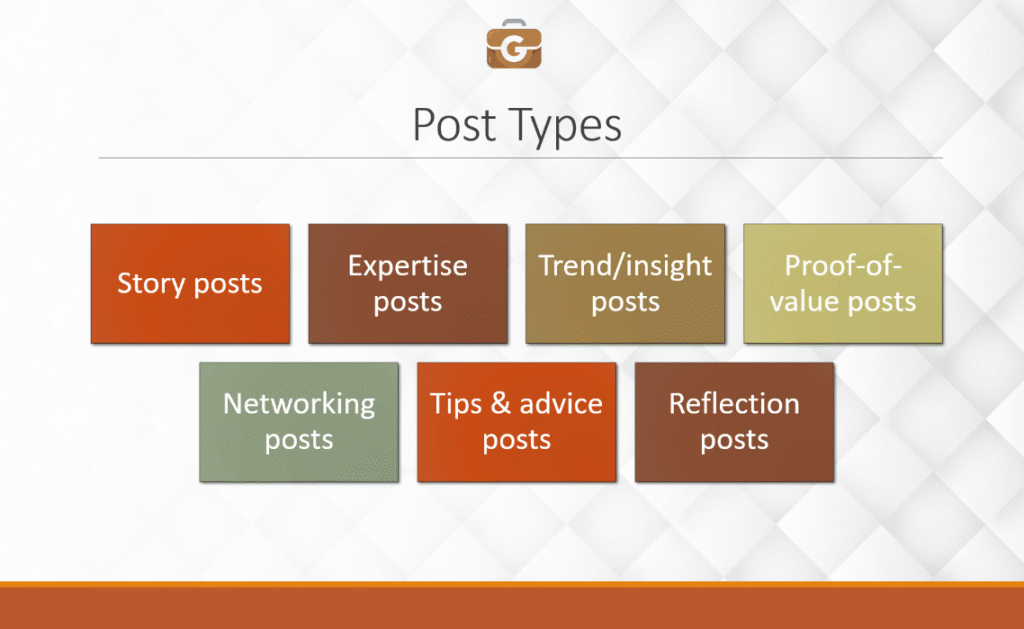
Aim for variety each week to keep your audience engaged:
- Story posts – Share personal career lessons.
- Expertise posts – Demonstrate your skills and processes.
- Trend/insight posts – Comment on industry changes.
- Proof-of-value posts – Show measurable results.
- Networking posts – Highlight your relationships and collaborations.
- Tips & advice posts – Offer practical, actionable advice.
- Reflection posts – Share wisdom and inspire discussion.
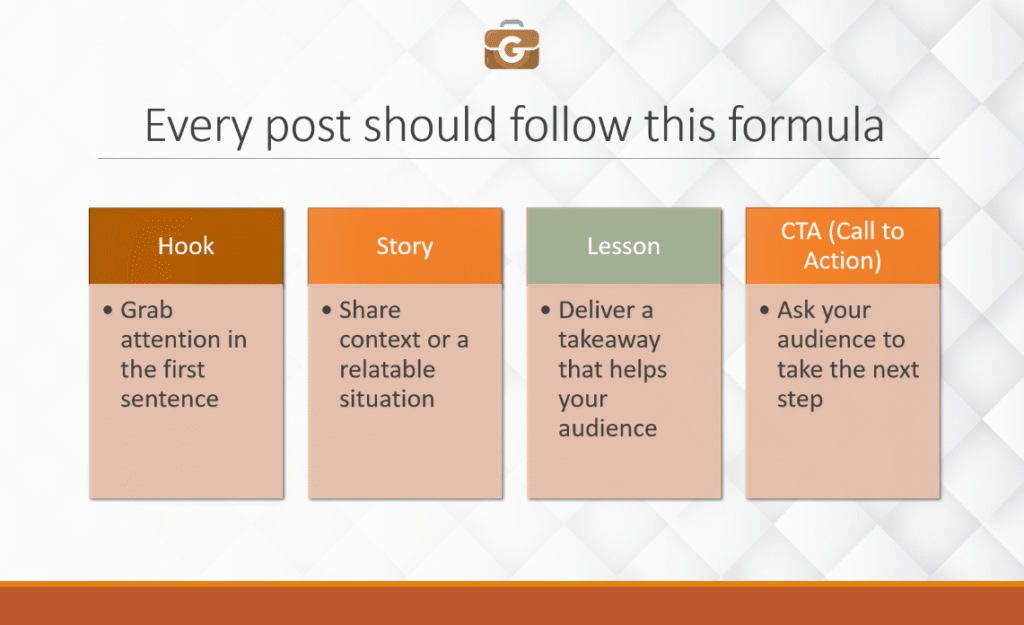
2. Follow the “Hook–Story–Lesson–CTA” Formula
Every post should:
- Hook – Grab attention in the first sentence.
- Story – Share context or a relatable situation.
- Lesson – Deliver a takeaway that helps your audience.
- CTA – Ask a question or invite engagement.
3. Engage Like It’s Part of the Job
- Reply to comments within 24 hours.
- Comment meaningfully on 3-5 other people’s posts daily.
- Send follow-up connection requests to people who engage with your content.
4. Keep a Content Log
Track ideas, posts, and engagement in a simple spreadsheet or notes app. This helps you stay consistent and spot patterns in what resonates most.


