
What a $236,000 PayPal Job Can Teach Us About Personal Branding
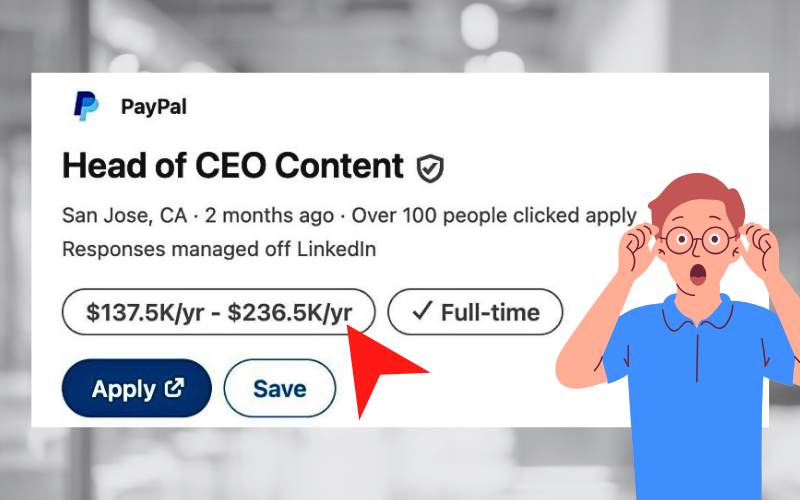
Recently, PayPal advertised a Head of CEO Content role with a salary range of $137,500 to $236,500 a year. This wasn’t for a Head of Marketing. It wasn’t for a Head of PR. It was for a role entirely dedicated to managing and growing the personal brand of PayPal’s CEO.
The job description made it clear, the successful candidate would be responsible for creating and executing a content strategy, managing the CEO’s social media presence, shaping thought leadership, and ensuring the CEO’s voice and vision were consistently communicated.
When a global company is willing to pay well into the six figures for someone to focus solely on personal branding at the leadership level, it sends a clear message… personal branding is no longer optional, it’s a business priority worth six figures at one of the biggest fintech companies in the world.
Why Personal Branding Matters in 2025
In today’s business landscape, personal branding is a driver of visibility, trust, and authority. A strong personal brand can:
- Increase visibility so that your name and expertise are top of mind in your industry.
- Build trust with customers, employees, and investors by showing the human side behind the role.
- Establish authority through thought leadership, industry commentary, and original ideas.
- Attract talent by drawing in people who align with your values and vision.
- Open doors for deal-making by creating relationships and opportunities before the first conversation even happens.
The expectation now is that leaders and professionals at every level will be visible beyond the company logo. They are expected to share ideas, engage in discussions, and show up consistently in the places where their audiences spend time.
That’s why it’s telling that Alex Chriss, CEO of PayPal, with over 72,000 LinkedIn followers (at the time of writing), is part of a company willing to invest a six-figure salary in someone whose sole focus will be managing and amplifying his personal brand. The number of followers doesn’t diminish the need, in fact, it proves that even established leaders see value in showing up strategically and consistently.
What Personal Branding Requires
While the benefits of personal branding are clear, achieving them takes more than the occasional post or an updated profile picture. Building and maintaining a personal brand requires:
70% of employers say a personal brand is more important than a resume (CV), and nearly half (47%) admit they’re less likely to even interview a candidate they can’t find online
- Consistency – showing up regularly, not just when you “have time.” Whether it’s posting on LinkedIn three times a week, writing a monthly industry article, or delivering quarterly keynote talks, consistency builds familiarity and trust.
- A clear message – knowing what you stand for, who you’re speaking to, and the value you offer. Your content should align with your expertise and the impact you want to have.
- Engagement – replying to comments, joining conversations, and building relationships with your audience. A post without follow-up interaction is a missed opportunity to connect.
- Time & commitment – sustaining these efforts over the long term, even when your calendar is full or your workload is heavy.
- For some leaders, that might mean publishing a regular series of LinkedIn posts, contributing to industry publications, and accepting invitations to speak at events. For others, it could be a blend of online and offline visibility, from panel discussions to thought leadership videos.
This ongoing commitment is exactly why companies like PayPal are hiring dedicated professionals to manage the process at the CEO level.
Inside PayPal’s Head of CEO Content Role
PayPal’s job description for the Head of CEO Content makes it clear that this is far more than a posting-on-social-media position. It’s a senior, high-skill role designed to ensure the CEO’s voice, vision, and thought leadership are consistently visible and impactful.
The responsibilities include:
- Content creation and thought leadership – developing engaging narratives that reflect the CEO’s perspective, corporate priorities, and industry insights.
- Social media strategy for the CEO – creating and executing a comprehensive plan aligned with PayPal’s communication goals and brand voice.
- Monitoring and managing engagement – actively managing the CEO’s social channels, responding to comments, and fostering positive audience relationships.
- Analytics and reporting – tracking performance, analysing engagement, and adjusting strategy to optimise results.
- Collaboration with PR, marketing, and executive teams – ensuring a unified message across internal and external communications.
The qualifications are equally demanding:
- 12–15+ years’ experience in communications, PR, or social media management, with a strong focus on executive communications.
- Exceptional writing and storytelling abilities.
- Deep understanding of social media trends, platforms, and best practices.
- Industry knowledge, ideally within technology, payments, or a similar fast-moving sector.
At this level, personal branding for the CEO is a full-time role requiring strategic thinking, creativity, and the ability to operate at the highest levels of corporate communications.
Why You Might Want to Become a Key Person of Influence
Even if you’re not a CEO with a six-figure personal brand manager, there’s still a strong case for building your visibility. In his book, Key Person of Influence, Daniel Priestley, an entrepreneur, best-selling author and international speaker, argues that the most valuable professionals in any industry aren’t just competent, they’re memorable, sought-after, and connected.
He tells the story of a brilliant accountant who’s technically excellent but interchangeable. He competes on price, stacks up more qualifications, and still struggles to stand out. In contrast, another accountant with similar skills builds a personal brand, shares insights publicly, and becomes the go-to person for a specific type of client. Their reputation means opportunities find them and not the other way around.
That’s the essence of becoming a Key Person of Influence:
- People know who you are.
- They remember what you stand for.
- You attract opportunities instead of chasing them.
Personal branding, when done well, is the bridge from being good at your job to being known for your value. And in a competitive market, that shift can transform your career.
Summary
When PayPal advertised a Head of CEO Content role with a salary of up to $236,500, it sent a clear signal: personal branding is no longer optional — it’s a business priority. This article explores why personal branding matters in 2025, what it takes to build one, and why even technically brilliant professionals risk being replaceable without it. From increased visibility and trust to attracting talent and opening doors for deal-making, a strong personal brand is now as valuable as a CV, if not more. Drawing on Daniel Priestley’s Key Person of Influence, we highlight the shift from being competent to being memorable and in demand, and why that change can transform your career trajectory.
If this has convinced you that personal branding is worth investing in, the next step is knowing how to start. I’ve created a practical guide, complete with a ChatGPT prompt, a sample 7-day content plan, and a simple framework, to help jobseekers build their personal brand on LinkedIn.
Sources:


