
Andrei Buta: How One Idea Sparked a Crash Game Revolution
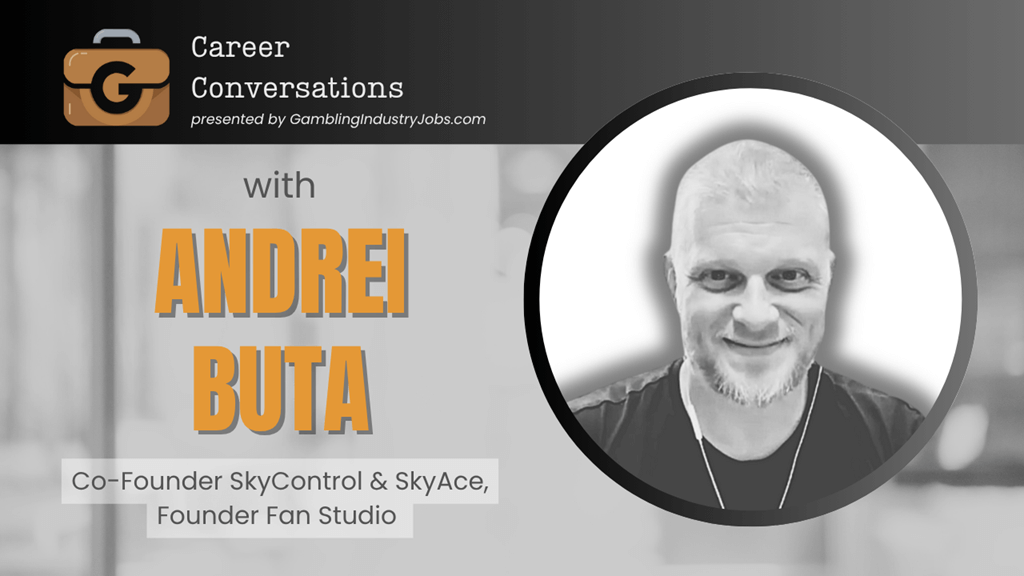
In this edition of Career Conversations, we explore the intersection of mobile game development, product innovation, and the future of gambling entertainment with Andrei Buta, a creative force with over 15 years of experience in gaming and a passion for redefining player engagement.
Andrei began his career building mobile and console games through his studio, Fan Studio, before being contracted to develop a full casino platform with over 40 games. That experience opened his eyes to a major gap in the iGaming space, a lack of innovation in player interaction.
Inspired by what he saw at ICE London and intrigued by the rise of crash games like Aviator, Andrei began imagining a more social and competitive version of the format. That spark led to the creation of SkyControl and SkyAce. Crash games that introduce multiplayer Player vs Player (PvP) modes, private rooms, and massive public pool-betting experiences that resemble poker more than traditional casino gameplay.
In this conversation, we talk about:
- Building small, agile game development teams
- The vision behind bringing social gameplay to crash games
- Why Andrei hires for mindset over gambling experience
- Game dev tools, creative iteration, and testing in real time
- Upcoming trends like skill-based gambling and streamer-integrated gameplay
Andrei also shares honest advice for newcomers, his thoughts on remote vs in-person creativity, and how user feedback has shaped every step of his product journey.
This article highlights key takeaways from the interview. 👉 You can watch the interview above.
From game dev to redefining crash games
After more than a decade building mobile and console games, Andrei found himself at a crossroads, one that would lead to the birth of SkyControl. What started as a client project to develop a casino platform opened his eyes to an industry-wide gap: traditional crash games lacked innovation and social engagement. A visit to ICE London in 2020 became the turning point, inspiring him to create something new.
Competitive, multiplayer crash games designed for the next generation of players.
Key takeaways:
- Andrei’s entry into iGaming came from a contract to build a 40-title casino platform.
- A trip to ICE London revealed the lack of innovation in crash games.
- Seeing Aviator sparked the idea for social and competitive gameplay.
- That insight led to the founding of SkyControl in 2023.
- The shift from passive to player-versus-player crash games became Andrei’s focus.
“It was very weird because I saw a huge gap in innovation. Especially in player engagement. That’s when I first saw the Aviator and it really caught my eye at that point. So at that point it sparkled the idea, what if crash games were competitive and social, not just passive?”
Inside Skycontrol’s unique approach to crash games
Crash games have exploded in popularity, but most remain limited in scope, offering passive, single-player experiences. In this part of the conversation, Andrei breaks down how SkyControl is pushing the boundaries with offline access, private PvP rooms, and large-scale public betting modes. Drawing inspiration from social formats like poker, SkyControl introduces new ways for players to challenge friends and compete in real time, making crash gameplay more interactive than ever.
Key takeaways:
- SkyControl launched with SkyAce, the offline crash game for markets with limited connectivity.
- The platform now offers both classic and innovative PvP multiplayer crash modes.
- Players can create private rooms and challenge up to 25 friends, mimicking the feel of social poker games.
- Public pool-betting rooms currently support 100 players, with plans to scale up to 250 players per round.
- The focus is on transforming crash games into social, competitive experiences.
“We have the classic mode that everybody else has it. And then we have the PVP mode where you have one versus one challenges. Friends. You can actually create rooms with up to 25 friends. You can play in a private room. Similar to poker, yeah.”
Tools of the trade
Andrei shares the three key tools that power his team’s game development process. As both a designer and developer, Andrei blends creativity with structure, choosing tools that support visual design, technical execution, and team organization. His toolkit reflects a hands-on, collaborative approach to building games efficiently without sacrificing quality or innovation.
Key takeaways:
- Unity is the primary development engine used for over a decade.
- Figma supports UI/UX design and prototyping, allowing Andrei to stay hands-on as a designer.
- Trello is used for task management and keeping the team organized.
Advice for newcomers
Breaking into the gambling game development space can be daunting, especially for newcomers without industry experience. Andrei offers a simple yet powerful piece of advice: start by playing. He explains how understanding gameplay from the user’s perspective—whether through classic PC titles or social mobile games—can sharpen a creator’s instinct for what makes a game engaging, competitive, and worth returning to.
Key takeaways:
- Newcomers should study gameplay by playing a variety of titles—from classic PC games to mobile social games.
- Experiencing games as a user helps developers and designers better understand mechanics, flow, and player retention.
- SkyControl’s own mechanics were inspired by observing what makes gameplay “sticky”.
“Play games from classic PC games to social mobile titles. That’s how we came up with SkyControl Control mechanics. Experiencing games from the user side helps you understand flow tension and what makes gameplay sticky.”
Inside Skycontrol’s lean development process
Andrei shares how his team approaches game development with agility and purpose. Rather than relying on large-scale teams, SkyControl was built by a compact, focused group of specialists, allowing them to iterate quickly and stay close to their creative vision. The development process didn’t just follow a set plan; it evolved in response to real-time ideas and user experience insights, leading to the creation of unique features like PvP crash gameplay inspired by poker.
Key takeaways:
- SkyControl was developed by a small team of 7–8 people, including backend/front-end developers, DevOps, UI/UX artists, and testers.
- Smaller teams allow for quicker iteration and problem-solving compared to larger setups.
- The PvP crash concept evolved naturally during the development process, rather than being part of the original plan.
- SkyControl’s gameplay is intentionally social and competitive, comparable to the experience of poker.
- The game’s evolution was driven by identifying engagement gaps and acting on creative opportunities.
“Because we started with the idea of developing a standard crash game and that’s it, and while working on it, we said, wait, it would be nice to challenge your friends to play against them to bet and to take their bets you know that’s what makes it interesting.”
What Andrei looks for when building his team
In this section, Andrei discusses his hiring philosophy and why traditional gambling industry experience isn’t always a must. Instead, he focuses on mindset, valuing curiosity, creativity, and a willingness to learn above all. Whether candidates come from psychology or mathematics, what matters is what they’ve built, not just where they’ve worked. For roles like game development, he looks for concrete proof of initiative through prototypes, personal projects, and shipped games.
Key takeaways:
- Industry experience in gambling is not a requirement at SkyControl.
- Top hires have come from unrelated fields like psychology and mathematics.
- The most important traits Andrei looks for are curiosity, creativity, and hunger to learn.
- For game developer roles, prototypes and shipped games carry the most weight.
- Other roles are more flexible and open to diverse backgrounds.
“My personal opinion is that what matters most is curiosity, creativity, and the hunger to learn. So we can teach the industry specific stuff. But the mindset is harder to train, you know.”
Face-to-face collaboration over remote work
Andrei believes in the power of in-person collaboration, especially when it comes to creative disciplines like game development. In this part of the interview, he explains why SkyControl prioritizes real-time interaction among team members and how that mirrors the social gameplay experiences they aim to create for users.
Key takeaways:
- SkyControl does not operate fully remotely; they prioritize in-person collaboration.
- Remote work has its advantages, but Andrei believes creativity thrives face-to-face.
- Spontaneous ideas, faster iteration, and stronger synergy are best achieved in physical environments.
- The emphasis on human connection within the team reflects the multiplayer and social nature of SkyControl’s games.
“While remote can be efficient for certain tasks, I strongly support physical collaboration, especially in game development. That’s creative synergy, quick iteration, and spontaneous ideas, thriving face-to-face environments.”
Influencer Marketing & Streamers
Andrei discusses SkyControl’s future plans for influencer partnerships. While the company hasn’t officially launched collaborations yet, they’re strategically waiting for the right moment, once all core integrations are complete. Andrei sees massive potential in streamer-led gameplay, especially through SkyControl’s real-time pool-betting modes, which allow audiences not just to watch, but to actively join and compete. It’s a natural fit for charismatic creators who thrive on audience interaction.
Key takeaways:
- SkyControl hasn’t yet launched influencer partnerships but has tested the concept and built a list of potential collaborators.
- The team is waiting for technical integrations to be complete before going live with influencer marketing.
- The ideal influencer has strong charisma and audience engagement skills.
- SkyControl’s pool-betting mode is designed to let streamers play live with their viewers, not just perform for them.
- This model turns passive spectators into active participants, creating a new layer of engagement.
“At the moment, they only stream and people are watching, but now they will be able to join and play together. So it’s a next level of interaction between the streamers and players.”
Skycontrol’s Future Plans
As SkyControl continues to evolve, Andrei reveals bold plans for both international growth and new gameplay features. With a presence already established in Kenya, the team is preparing to launch across more African countries, Asia, India, and Latin America in the next few months. Beyond market expansion, Andrei envisions esports-style tournament modes and even a land-based casino version of SkyControl, bridging the digital and physical worlds of gaming with real-time, social competition.
Key takeaways:
- SkyControl is currently live in Kenya, with imminent launches planned in South Africa, Asia, India, and Latin America.
- An exclusive deal is in the works with a major partner in South Africa.
- The next two years will focus on global expansion and partnerships with game aggregators.
- New gameplay modes are in development, including tournament functionality.
- A land-based casino version of SkyControl is planned, featuring physical terminals and live leaderboards, similar to poker tournaments.
“Each player goes to a machine and they actually bet against each other. So they’ll have both social interaction in the casino and in the game.”
Emerging Trends
Andrei identifies the top trends influencing the future of game creation in the gambling industry. From the rise of skill-based gambling mechanics to the increasing demand for social-first features and streamer integration, Andrei highlights how player expectations are evolving, and how technology is finally catching up to enable more interactive and innovative gameplay experiences.
Key takeaways:
- Skill-based gambling is a growing trend, particularly in crash games like SkyControl.
- Social-first features, such as real-time PvP modes, are becoming essential for player engagement.
- Streamer-integrated gameplay is expected to become a major trend, allowing audiences to participate, not just watch.
- The market is increasingly driven by a hunger for innovation, and development tools are now enabling more experimental features.
- Future success lies in combining game mechanics with community interaction and content creator engagement.
“We’ve seen that the market is hungry for innovation. And now the tools are finally catching up and allow us to do and to implement new mechanics.”
Closing insight
As the conversation wraps up, Andrei Buta reflects on a powerful lesson learned from over 15 years in game development. His advice is clear: successful games are built through early user engagement, continuous iteration, and a relentless focus on refining the player experience. Especially in the iGaming industry—where retention is everything—this mindset is key to creating products that truly resonate.
Key takeaways:
- One of the most important lessons in game development is to involve users early in the process.
- Iterating based on user feedback leads to stronger, more engaging games.
- Refining the experience is an ongoing effort, critical for improving retention.
- In the iGaming space, retention is a core goal for operators and developers alike.
“You need to engage with your users early, iterate with their feedback, and never stop refining the experience. That’s how you create, you develop games that stick with the audience and increases the retention.”
Summary
From game development roots to pioneering the next evolution of crash games, Andrei’s journey is a testament to what happens when creativity, user empathy, and strategic insight come together. Whether it’s hiring beyond the industry, building social-first gameplay, or pushing for innovation in underdeveloped markets, his approach to iGaming is both forward-thinking and deeply grounded in real player experiences. As SkyControl continues to scale globally, Andrei’s vision offers valuable lessons for anyone looking to build products, or careers, that truly stand out in the gambling industry.
Frequently Asked Questions
Andrei noticed that most crash games were designed as passive, single-player experiences with limited innovation in player interaction. After being contracted to build a full casino platform and later visiting ICE London in 2020, he saw a clear gap in social engagement. Seeing the popularity of Aviator helped crystallise the idea that crash games could evolve into something more competitive, interactive, and community-driven.
SkyControl expands crash gameplay beyond the standard “cash out before it crashes” loop by adding multiplayer competition and social formats. Key differentiators include:
Private PvP rooms where players can challenge up to 25 friends
Public pool-betting rooms supporting around 100 players, with plans to scale to 250 per round
A product direction inspired by poker-style social dynamics rather than traditional solo casino play
SkyAce also launched as an offline crash game designed for markets with limited connectivity.
Pool-betting turns each round into a shared competitive environment where many players participate at once, similar to the energy of a poker table. Instead of playing in isolation, players compete in real time, react to outcomes together, and feel social pressure and momentum across the group. This design shifts crash games from “solo risk-taking” to “multiplayer tension,” which can increase engagement and repeat play.
Andrei believes iGaming knowledge can be taught, but curiosity, creativity, and a hunger to learn are harder to train. He’s hired strong contributors from fields like psychology and mathematics because what matters is how people think and what they’ve built. For developers in particular, prototypes, personal projects, and shipped games are stronger proof of capability than a CV packed with gambling company names.
SkyControl was built by a compact team of about 7–8 specialists, including backend and front-end developers, DevOps, UI/UX artists, and testers. Andrei prefers smaller teams because they iterate faster, solve problems quickly, and stay close to the product vision. The PvP concept itself emerged during development through rapid experimentation rather than being fixed in the original plan.
Andrei’s core toolkit is built for speed, collaboration, and iteration:
Unity for game development and deployment
Figma for UI/UX design and prototyping
Trello for task tracking and team organisation
This stack supports quick creative testing and structured execution without slowing down a small team.
He argues that creative work benefits from real-time energy: spontaneous ideas, rapid feedback loops, and stronger team synergy. SkyControl’s products are built around social interaction, and Andrei sees a direct link between how the team collaborates and the kind of multiplayer experiences they want players to have. Remote work can be efficient for specific tasks, but he believes innovation accelerates in physical environments.
Streamer integration can turn audiences from passive viewers into active participants. SkyControl’s pool-betting mode is designed so viewers can join a streamer’s live session and compete in the same rounds. That creates a new level of interaction where entertainment and gameplay merge, especially for charismatic creators who thrive on audience engagement.
His key principle is to involve users early and keep iterating based on real feedback. He sees retention as the core measure of success in iGaming, and believes the best games come from continuous refinement rather than perfecting something in isolation. Early user input helps teams identify what feels “sticky,” then improve flow, tension, and engagement over time.


